Enterprise AI Pricing, Privacy, and Security Comparison
March 29, 2026

AI tools have moved from experiment to business infrastructure in a matter of years. For most companies, the question is no longer whether to adopt them but which ones to buy, how much they actually cost, and what data protections come with them.
The pricing structures for enterprise AI are genuinely complex, and comparing them on an apples-to-apples basis requires understanding not just monthly seat costs but how usage is metered, what triggers additional charges, and what the terms say about your data.
This post breaks down four major enterprise AI platforms: OpenAI's ChatGPT, Anthropic's Claude, Google's Gemini, and Microsoft's Copilot. The analysis is strictly from a business buyer's perspective.
Learn more about state AI laws governing usage.
What Is a Token?
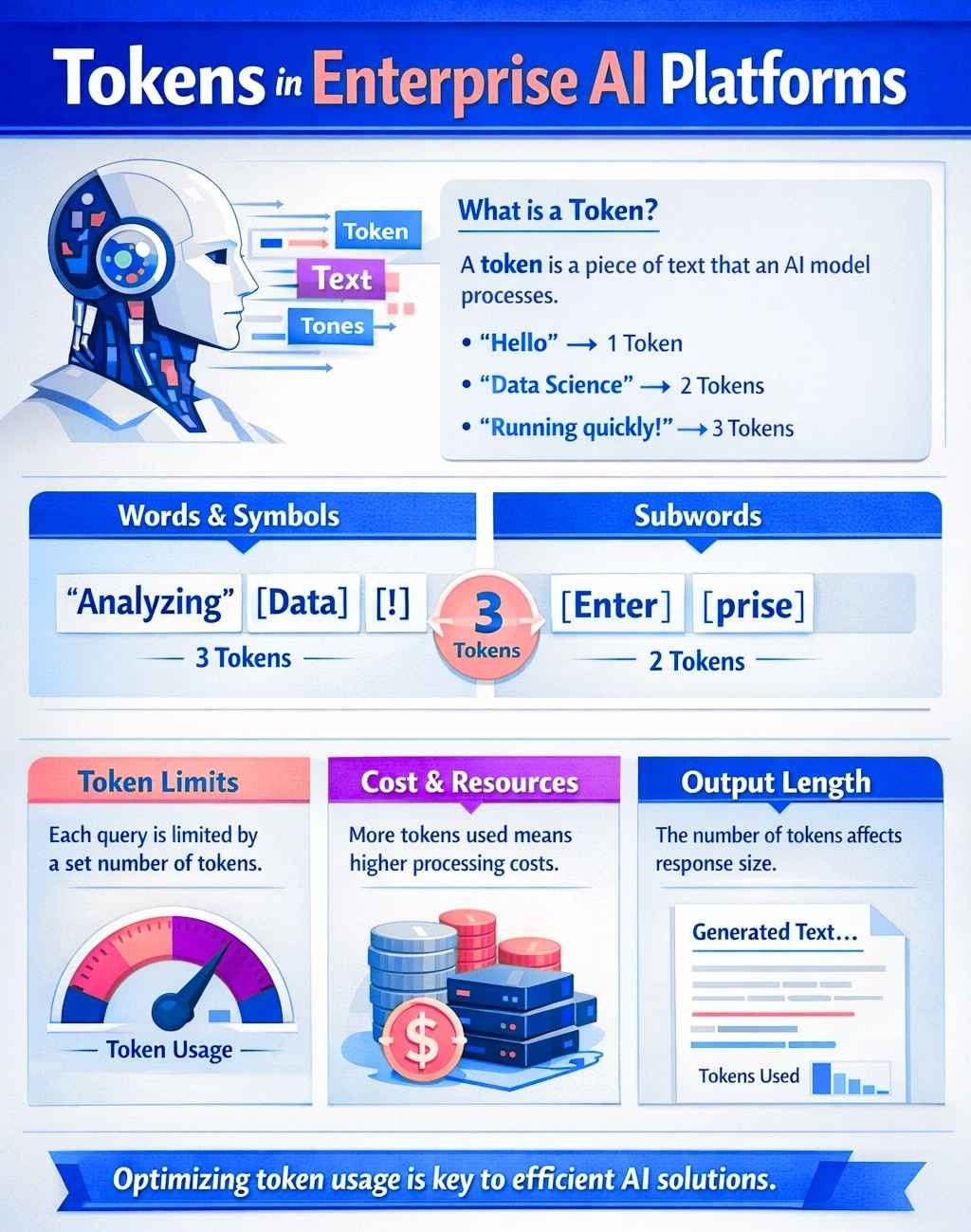
Before comparing costs, it helps to understand what you're actually paying for. Most enterprise AI platforms bill usage in tokens rather than words, messages, or pages. A token is roughly equivalent to four characters of text or about three-quarters of an average English word. The sentence you just read contains about 30 tokens.
Every interaction with an AI model involves two types of tokens: input tokens (the text you send, including any documents, context, or conversation history) and output tokens (the text the model generates in response). Both count toward your bill. Output tokens typically cost more than input tokens because generating text requires more computational work than reading it.
For subscription-based enterprise plans, you generally pay a flat per-seat monthly fee rather than per token. The token concept matters most when your team is building products on top of AI using a provider's applicatoin programming interface (API), when you exceed included usage limits, or when you are evaluating whether a flat subscription or pay-as-you-go API access is the better fit for your volume.
A practical example: a company processing 5 million input tokens and 2 million output tokens per month using Claude Sonnet at current API rates ($3 per million input tokens, $15 per million output tokens) would pay about $45,000 per month in API fees alone. That same workload might be far more cost-effective under a per-seat subscription model, depending on how many users are involved. Understanding your consumption pattern before signing a contract is essential.
ChatGPT Enterprise (OpenAI)
OpenAI offers business customers two primary subscription tiers below the full enterprise level. The ChatGPT Business plan (formerly called Team) runs $25 per user per month on an annual commitment, or $30 month-to-month, with a minimum of two users. Business plan data isn't used to train OpenAI's models by default, which is the critical privacy distinction from consumer plans.
ChatGPT Enterprise carries custom pricing through OpenAI's sales team, with market estimates putting it around $60 per user per month, a 150-seat minimum, and an annual contract requirement. Enterprise adds SOC 2 compliance, HIPAA Business Associate Agreement availability, single sign-on (SSO), System for Cross-domain Identity Management (SCIM) provisioning, audit logs, and unlimited high-speed access to OpenAI's current flagship model.
SCIM is an open standard protocol that automates the process of managing user identities across different systems and applications. In plain terms, it's the technology that lets your IT department add, update, or remove employee access to tools like Claude, ChatGPT, or Copilot automatically without manually logging into each platform to do it. SSO controls how users log in, with one set of credentials for all tools and applications. SCIM controls who has access and keeps that list synchronized automatically. You generally want both.
Data Policy Distinction
The important data policy distinction comes down to plan tier. On the free consumer plan, OpenAI's Terms of Use state the company may use your content to "provide, maintain, develop, and improve" its services, with an opt-out available but not enabled by default.
On Business and Enterprise plans, that training use stops entirely. Content isn't used to train models under either paid business tier. See the paid OpenAI Services Agreement.
For regulated industries, the HIPAA BAA availability on Enterprise is significant, but it's not automatic. It must be specifically requested and approved. API access, where usage is billed per token, is priced separately from any ChatGPT subscription and doesn't come bundled with a seat license.
Claude for Business (Anthropic)
Anthropic structures its business offerings into Team and Enterprise tiers. The Team plan starts at $25 per seat per month (annually) for a Standard seat, which includes chat, projects, connectors, SSO support, and admin controls, with a minimum of five seats. A Premium seat tier, priced at $125 per seat per month, adds Claude Code and early access to new collaboration features, which are relevant primarily for technical teams doing software development.
Enterprise pricing is custom, negotiated directly with Anthropic's sales team, and requires a minimum of 50 seats on an annual commitment. Enterprise adds a 500,000-token context window (compared to 200,000 on Team), HIPAA-ready configuration, SCIM provisioning, audit logs, custom data retention policies, and dedicated support. Anthropic explicitly states it does not train its models on Claude for Work data across business tiers.
One practical note for buyers: Anthropic does not publish specific numerical usage caps. Limits are dynamic and vary based on conversation length, model selected, and file attachments. This can complicate capacity planning for teams with heavy or predictable workloads. The API is priced separately from subscriptions, with Claude Sonnet 4.6 running $3 per million input tokens and $15 per million output tokens as of early 2026 — among the more competitive rates in the market for a flagship-tier model.
Anthropic's Constitutional AI design philosophy, which trains models with explicit safety and ethical guidelines, is a differentiator for businesses where AI output reliability and reduced hallucination risk are procurement criteria, particularly in legal, healthcare, and financial services contexts.
Microsoft 365 Copilot
Copilot is structurally different from the other three platforms because it is not a standalone product. It is an add-on that requires an existing qualifying Microsoft 365 subscription. The Microsoft 365 Copilot Business add-on runs $21 per user per month for organizations under 300 users, enabling Copilot across Word, Excel, PowerPoint, Outlook, and Teams. The full Microsoft 365 Copilot license for larger enterprise deployments is priced at $30 per user per month on an annual commitment, on top of the existing Microsoft 365 plan cost.
That stacking matters significantly for budget analysis. A business currently on Microsoft 365 Business Standard at roughly $12.50 per user per month effectively triples its per-seat Microsoft spend by adding Copilot. For regulated industries requiring E5 licensing, the total Microsoft per-seat cost including Copilot can approach $90 per user per month before any other tools are factored in.
The value proposition for Copilot is tight integration with the Microsoft 365 ecosystem. Unlike a separate AI chat interface, Copilot works directly inside Outlook, Teams, Word, and Excel, grounded in your actual organizational data through Microsoft Graph. For businesses deeply embedded in Microsoft's stack, that contextual awareness is a meaningful advantage. Data privacy protections on paid Copilot plans include enterprise-grade compliance controls, and content is not used to train Microsoft's models under business and enterprise agreements.
Autonomous AI agents within Copilot introduce variable costs through metered billing on an Azure subscription, priced at 25 Copilot Credits per agent trigger. This usage can scale unpredictably and warrants governance controls before broad deployment. Microsoft has also announced M365 suite price increases effective July 1, 2026, which will affect the base subscription cost underlying Copilot deployments.
Gemini for Google Workspace
Google took a different approach than its competitors by eliminating the separate Gemini add-on entirely. As of January 2025, Gemini AI features are bundled into all Google Workspace Business and Enterprise plans. Google raised base Workspace subscription prices by about 17-22% to absorb the cost. Business Standard, the most commonly cited plan for growing businesses, now runs $14 per user per month on an annual commitment, up from about $12. Enterprise pricing remains custom.
The practical implication is that every Workspace user on Business Standard and above now has Gemini access, whether they use it or not. For companies that want selective AI deployment (giving access only to roles where it generates value) this bundled model removes that option at the business-tier level. Enterprise-tier clients retain administrative controls to manage and disable Gemini features by user.
Google states that regardless of Workspace subscription tier, its models aren't trained on customer data and human reviewers don't access prompts or responses. For companies with compliance requirements, Google Workspace is HIPAA eligible, though a Business Associate Agreement must be executed separately.
For businesses already in the Google ecosystem, Gemini's integration across Gmail, Docs, Sheets, Meet, and Drive is seamless. Google's 2 million token context window on higher-tier models is among the largest available, making it well-suited for document-heavy workflows like contract analysis, research synthesis, and large-scale data review.
Enterprise Pricing at a Glance
- ChatGPT Business (OpenAI): $25/user/month (annual) — no model training on business data; Enterprise tier ~$60/user/month custom, 150-seat minimum, SOC 2, HIPAA BAA available
- Claude Team Standard (Anthropic): $25/user/month (annual), 5-seat minimum — no model training on work data; Enterprise tier custom, 50-seat minimum, HIPAA-ready, 500K token context
- Microsoft 365 Copilot: $21–$30/user/month add-on (requires existing M365 subscription) — no model training on business data; agent usage billed separately via Azure credits
- Google Workspace with Gemini: $14/user/month Business Standard (annual) — Gemini bundled; no model training on customer data; Enterprise custom pricing with admin controls for AI feature management
Considerations for Business Buyers
Pricing is only one variable in the decision. Several other factors carry equal or greater weight for businesses with compliance requirements, regulated data, or specialized workflows.
Data privacy defaults matter more than the headline price. All four platforms protect business data from model training under their paid enterprise tiers, but the mechanisms differ. Google bundles it universally. Microsoft protects it contractually under the M365 agreement. OpenAI and Anthropic require specific enterprise agreements and, for HIPAA coverage, separate BAA execution. Understanding exactly what your contract says — not what the marketing page implies — is the appropriate due diligence standard.
Context window size affects the depth of work the AI can handle in a single session. Anthropic's Enterprise tier offers a 500,000-token context window. Google's advanced Gemini models reach up to 2 million tokens. OpenAI's Enterprise tier offers an extended context window under its current model generation. For businesses analyzing long contracts, large codebases, or multi-document research tasks, this specification has direct workflow implications.
Total cost of ownership extends beyond seat licenses. Implementation, training, governance infrastructure, and for Copilot specifically, the base M365 subscription cost and variable agent usage, all add to the real annual number. A 50-person company at $25 per seat for Claude Team spends $15,000 per year on licenses. That same company adding Copilot to an existing Microsoft 365 Business Standard subscription adds about $12,600 per year in Copilot licenses alone, on top of existing M365 costs.
Finally, the right tool is often determined by where your team already works. Copilot's advantage is tight integration into Microsoft 365 workflows. Gemini's advantage is the Google ecosystem. Claude and ChatGPT function as more platform-agnostic tools, accessible via API or standalone interfaces, and are generally the stronger choice when building AI into custom workflows or when the primary use case is writing, analysis, and research across many document types.
Start With Policy, Not Subscription
Before any procurement decision, businesses should understand how their teams are already using AI. In many cases, employees are using consumer-grade tools on personal accounts before any enterprise agreement is in place. This creates data exposure that no enterprise license can retroactively address.
Download a free AI Usage Policy on the STACK AI Hub
"Understanding your company AI use cases is essential," said Rich Miller, CEO of STACK Cybersecurity. "You need to understand what you need AI tools to do before you can make an informed purchase."
Need Help Implementing AI Solutions?
STACK Cybersecurity provides comprehensive AI readiness assessments, including licensing analysis, security implementation, and ongoing monitoring. We help you understand which AI tool aligns with your business needs and budget while ensuring proper security controls are in place.
Email: info@stackcyber.com
Phone: (734) 744-5300